Dec. 08, 2025
A CNC cylindrical grinding machine has become an essential piece of equipment in modern precision machining. With industries demanding tighter tolerances, improved surface finishes, and higher production efficiency, this machine plays a critical role in processing cylindrical components with exceptional accuracy. Its ability to automate complex grinding operations makes it a preferred solution in automotive, aerospace, bearings, hydraulics, and various high-precision engineering sectors.
A CNC cylindrical grinding machine is designed to perform precision grinding on the external or internal surfaces of cylindrical workpieces. Using computer numerical control, it allows consistent and automated machining with minimal manual intervention. It produces components with high dimensional accuracy, superior roundness, and excellent surface finish.
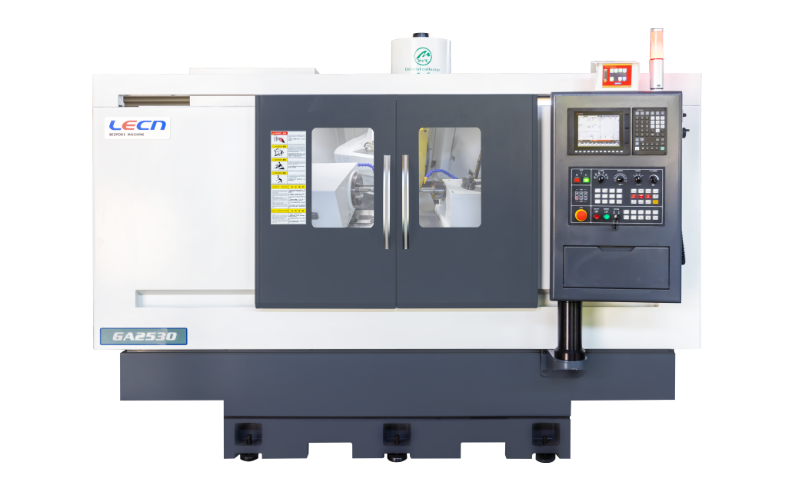
The machine uses a rotating grinding wheel and a rotating workpiece that are precisely controlled in speed, feed, and position. Advanced CNC systems enable multi-axis movements, automated adjustments, and flexible machining strategies.
Key operating processes include:
Workpiece clamping and alignment
Grinding wheel selection and dressing
CNC programming for feeding, depth, and speed
Rough grinding and fine grinding
Online measurement and automated compensation
Final inspection for tolerance and surface quality
The entire process ensures high repeatability, stability, and output consistency even for complex geometries.
Different machine types meet various production needs:
External cylindrical grinding machines — Focus on OD surfaces, widely used in shafts, rollers, pins.
Internal cylindrical grinding machines — Used for inner bore grinding with tight tolerances.
Universal cylindrical grinding machines — Handle both OD and ID grinding in a single setup.
High-precision cylindrical grinders — Designed for micron-level accuracy in demanding applications.
Heavy-duty cylindrical grinding machines — Built for large workpieces such as wind turbine shafts or industrial rollers.
Choosing the right type depends on the material, tolerance requirements, workpiece dimensions, and production volume.
CNC cylindrical grinding machines are indispensable in sectors requiring reliable and accurate cylindrical parts. Major applications include:
Automotive engine components, crankshafts, camshafts, and transmission shafts
Aerospace turbine shafts, landing gear parts, actuators
Bearing rings, rollers, and precision bearing assemblies
Hydraulic cylinders, piston rods, and valve components
Industrial rollers for printing, packaging, and steel processing
Mold and toolmaking that require high surface quality
Medical components such as surgical instruments and implants
These industries depend on tight tolerance control, stable concentricity, and superior surface finish.
Manufacturers choose CNC grinders for several performance benefits:
High Precision and Tight Tolerances
Achieves micron-level accuracy, ensuring high concentricity and roundness.
Excellent Surface Finish
Produces smooth and consistent finishes, critical for bearing and hydraulic components.
High Productivity
CNC automation reduces cycle time, enabling continuous and batch production.
Flexible Machining Capabilities
Handles multiple grinding tasks—tapered surfaces, stepped shafts, complex geometries.
Reduced Manual Errors
Automated measurement and compensation ensure stable repeatability.
Suitable for Hard Materials
Effectively processes hardened steels, carbide, stainless steel, and heat-treated components.
These advantages directly improve production efficiency while lowering operational risk.
As industries shift toward high-precision manufacturing and lightweight, high-strength materials, the need for advanced grinding technology continues to rise. CNC cylindrical grinding machines enable manufacturers to meet global quality standards, reduce defects, and accelerate production cycles. Their versatility ensures long-term relevance across multiple industrial sectors.

Previous: None
Next: None