Sep. 14, 2026
Constant velocity joints are critical driveline components used to transmit torque smoothly while allowing changes in operating angle between the transmission, drive shaft, and vehicle wheels. Because CV joints operate continuously under rotational load, their internal tracks, races, cages, splines, and mating surfaces require tight dimensional control and consistent surface quality.
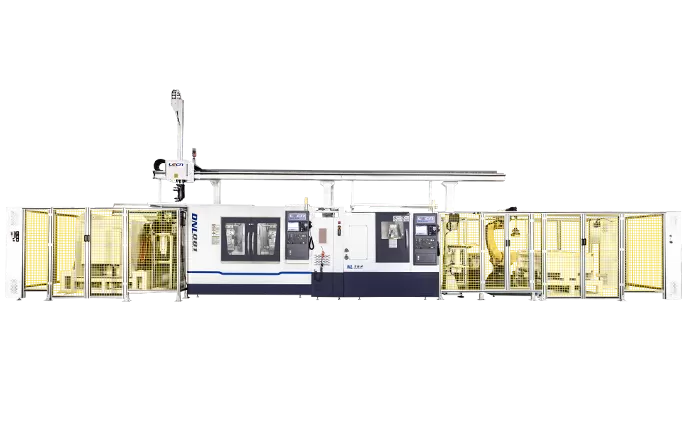
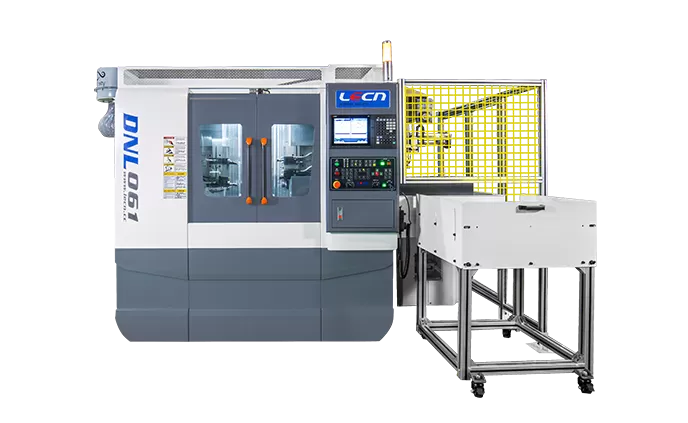
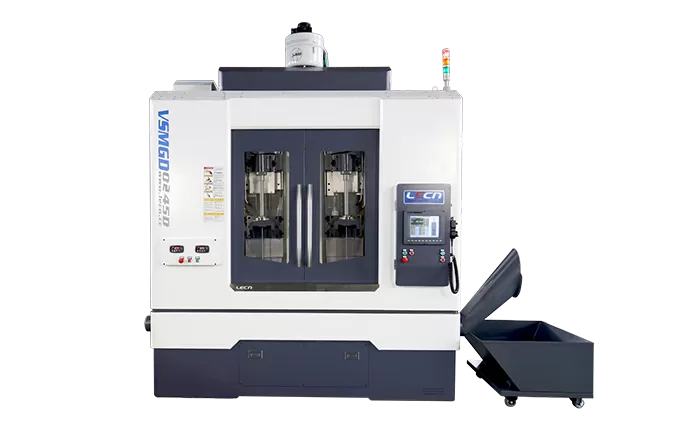
For automotive component manufacturers, a CV joint machine is therefore not simply a general-purpose machining system. Depending on the production process, dedicated equipment may be used for ball track grinding, inner race machining, cage window milling, tripod spider grinding, spline machining, finishing, inspection, and automated production handling.
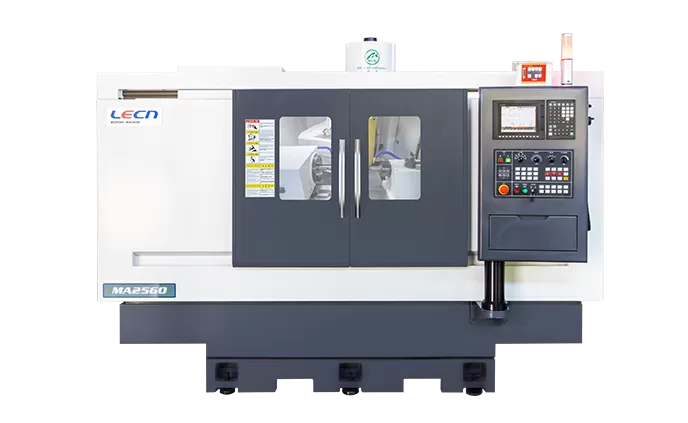
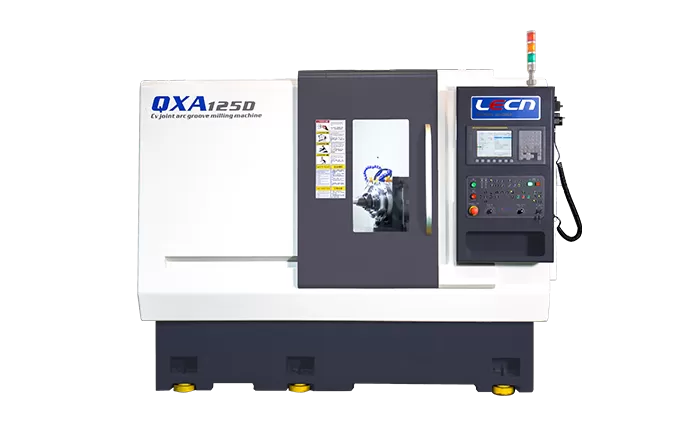
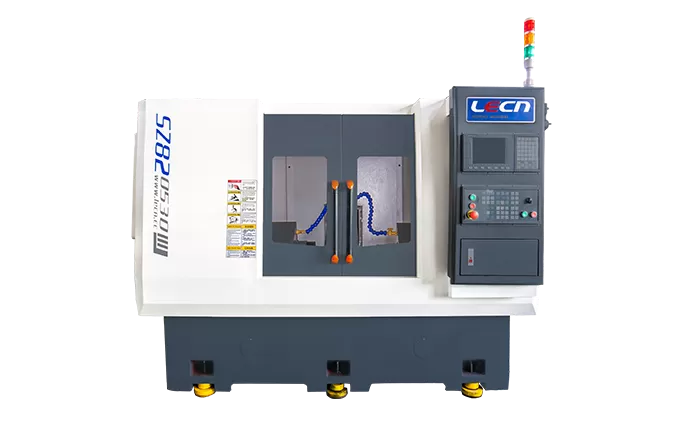
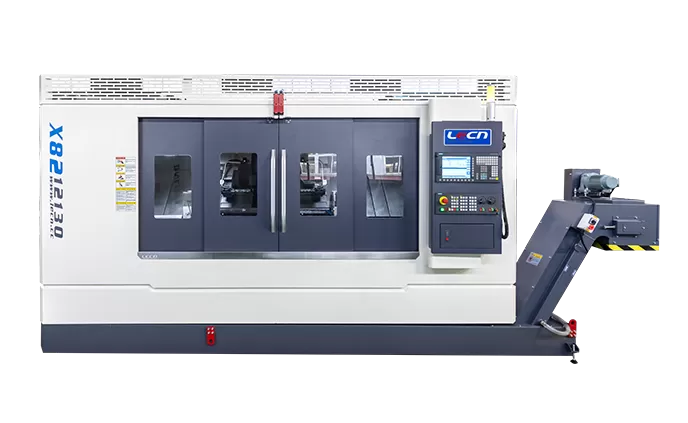
Industrial equipment manufacturers already provide dedicated machines for inner-race ball-track grinding, cage-window milling, and tripod-spider grinding, demonstrating how specialized CV joint production has become.
This article examines the major CV joint machine applications in automotive manufacturing, where these machines fit into the production line, and what manufacturers should consider when selecting equipment for high-volume CV joint production.
A typical ball-type constant velocity joint contains several precision components, including:
Outer race or outer housing
Inner race
Ball tracks
Steel balls
Cage
Splined shaft or hub
Retaining features and grooves
Tripod-type CV joints use a different configuration that generally includes a tripod spider and rollers.
The geometry of these parts directly influences torque transmission, articulation, vibration, friction, and service life. JTEKT describes CV joint inner and outer races as containing precisely formed ball grooves and notes that CV joint components require high dimensional accuracy and wear resistance for long-term power transmission.
This makes machining accuracy particularly important in areas such as:
Ball-track profile
Track position and spacing
Raceway surface finish
Inner and outer race concentricity
Cage-window geometry
Spline accuracy
Tripod-spider geometry
Shaft runout
Matching dimensions between assembled components
A dedicated CV joint manufacturing machine helps manufacturers maintain these characteristics consistently across high production volumes.
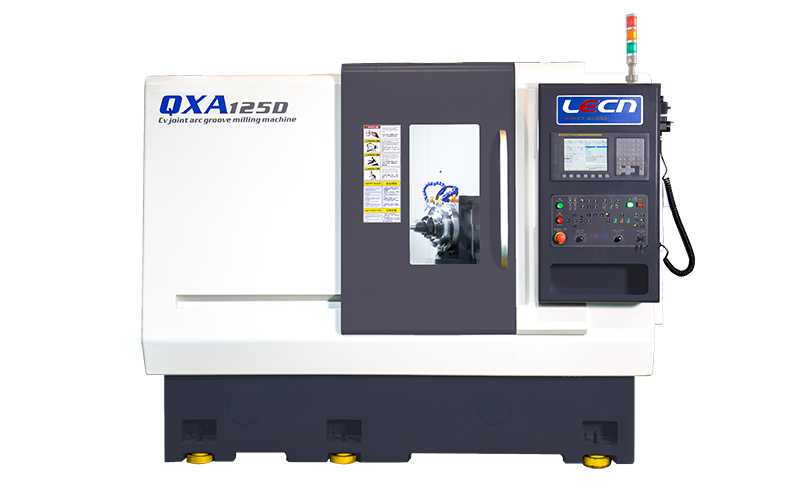
One of the most important applications of CV joint machining equipment is the production of the inner race ball tracks.
The inner race transfers torque through balls positioned between the inner and outer tracks. The geometry of these tracks must therefore be controlled carefully.
A CV joint grinding machine can be used to finish the ball tracks after previous machining and heat-treatment processes.
Typical production requirements include controlling:
Track profile
Groove depth
Groove spacing
Track symmetry
Surface finish
Dimensional consistency between grooves
Dedicated equipment is particularly useful when manufacturers produce several joint sizes or different numbers of grooves. Some CVJ processing systems use NC indexing and programmable dressing to accommodate different workpieces and track configurations.
Poor track geometry can affect how loads are distributed through the balls.
Possible consequences include:
Uneven contact pressure
Increased friction
Premature surface wear
Higher vibration
Increased operating noise
Reduced joint durability
For OEM and Tier 1 driveline suppliers, reliable ball-track machining is therefore one of the foundations of consistent CV joint performance.
The outer race is another major machining area in constant velocity joint production.
Depending on the CV joint design, manufacturing may include:
Turning
Boring
Ball-track machining
Raceway grinding
Shaft machining
Spline machining
Snap-ring groove machining
Boot-groove machining
Face finishing
Manufacturing accuracy is especially important because the outer race, shaft, and internal tracks must operate around a controlled rotational axis.
Manufacturing methods described for automotive CV joints show that reference points and race geometry may be used during machining to maintain alignment between components. Proper concentricity can help reduce imbalance, noise, vibration, and harshness in the finished driveline.
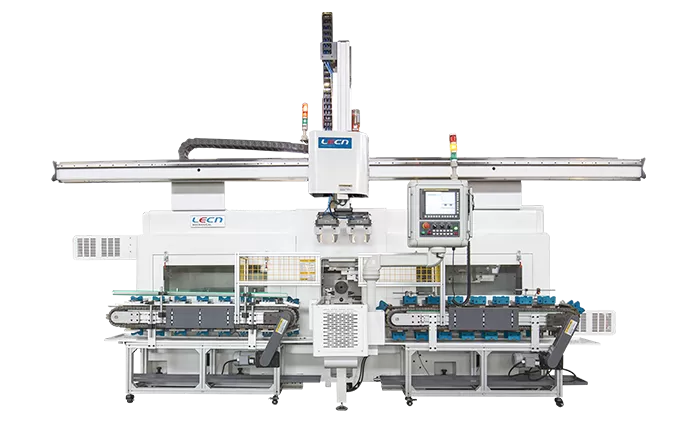
For large automotive production programs, CV joint machines can be integrated with automatic loading systems so that forged or pre-machined outer races move directly through subsequent machining operations.
The cage keeps the balls correctly positioned between the inner and outer races.
Its windows must therefore be machined with controlled:
Width
Length
Position
Spacing
Edge geometry
Surface quality
A dedicated CV joint cage window milling machine can machine these openings efficiently and repeatedly.
This is particularly valuable for high-volume automotive manufacturing because several windows must be produced around each cage while maintaining consistent indexing.
Dedicated cage-window milling equipment is commercially used as part of CV joint manufacturing systems, including machines designed for tooling changes between different workpiece types.
Cage machining systems can support production for:
Passenger-car CV joints
SUV drive shafts
Light commercial vehicles
AWD driveline systems
Electric vehicle drive shafts
Replacement CV joint production
For manufacturers producing multiple joint models, flexible tooling and CNC indexing can reduce changeover requirements.
Not every CV joint uses the traditional ball-and-cage configuration.
Tripod joints are commonly used as plunging joints in automotive drive shafts. These joints accommodate axial movement while transmitting torque through the driveline.
A tripod spider typically contains three trunnions positioned around the central body.
Dedicated tripod spider grinding machines can be used to finish critical surfaces and maintain consistent geometry between the three stems. Specialized CVJ equipment suppliers specifically offer tripod-spider stem grinding machines for this purpose.
Important machining considerations can include:
Stem diameter
Position accuracy
Surface finish
Symmetry between trunnions
Center alignment
Dimensional repeatability
Accurate tripod-spider production contributes to smooth plunging motion and stable torque transmission.
CV joints must connect securely with drive shafts, wheel hubs, differentials, or transmission components.
For this reason, many CV joint components include internal or external splines.
Production equipment may therefore include processes such as:
Spline hobbing
Spline broaching
Spline rolling
Spline grinding
Shaft turning
End-face machining
Snap-ring groove machining
Boot-seat machining
Spline accuracy affects fit, torque transfer, and assembly reliability.
In high-volume CV axle manufacturing, spline machining may be integrated with other machining processes so the component passes through fewer independent setups.
Reducing unnecessary reclamping can also help control cumulative positioning errors.
CV joint components are typically expected to provide high wear resistance because their contact surfaces experience repeated rolling and sliding loads.
Heat treatment is therefore an important part of many CV joint manufacturing processes.
However, heat treatment may create small dimensional changes. Critical surfaces can consequently require precision finishing afterward.
Grinding may be used on:
Ball tracks
Bearing surfaces
Outer diameters
Inner race surfaces
Tripod stems
Shaft surfaces
A properly configured CV joint grinding machine allows manufacturers to bring hardened components to their final dimensional and surface requirements.
Automotive CV joint production commonly involves combinations of forging, heat treatment, precision machining, and grinding because of the demanding durability requirements of these components.
Modern automotive manufacturing increasingly emphasizes automation, especially for components produced in large volumes.
CV joint machining equipment can be incorporated into automated cells using:
Robot loading
Gantry loaders
Automatic part orientation
Conveyor transfer
Automatic clamping
Tool monitoring
Automatic gauging
Part traceability
Machine-to-machine communication
Automated loading and unloading is already applied to industrial CV joint grinding systems.
For CV joint manufacturers, automation can provide several practical advantages.
Higher production consistency
Automated workpiece positioning reduces variation caused by manual loading.
Lower handling time
Parts can move continuously between machining, grinding, inspection, and cleaning stations.
Higher equipment utilization
Automatic loading allows machining equipment to operate with less operator intervention.
Better traceability
Production data can be associated with individual batches or parts.
Reduced labor dependency
Automation is particularly valuable for large-volume Tier 1 and Tier 2 automotive production.
Machining alone is not enough. Automotive CV joint manufacturers must also verify that critical dimensions remain within production specifications.
A CV joint manufacturing line may therefore incorporate:
In-process gauging
Post-process dimensional inspection
Track profile measurement
Diameter measurement
Runout measurement
Surface roughness inspection
Vision inspection
SPC data collection
Measurement feedback can also be used to compensate machining parameters before dimensional variation produces a large quantity of rejected parts.
This is especially useful in mass production where relatively small deviations in grinding-wheel condition, tool wear, thermal stability, or workpiece positioning can affect many components.
Passenger vehicles represent one of the major applications for CV joint production equipment.
Front-wheel-drive vehicles commonly require drive shafts capable of transmitting torque while the wheels steer and move with the suspension.
CV joints are therefore widely used in:
Compact cars
Sedans
Crossovers
SUVs
Performance vehicles
Large automotive programs require manufacturers to produce thousands or millions of consistent driveline components.
For these projects, machine selection is usually driven by more than machining accuracy alone.
Manufacturers also consider:
Cycle time
Tool life
Changeover time
Machine uptime
Automation compatibility
Maintenance requirements
Scrap rate
Production cost per component
AWD and 4WD vehicle architectures increase the number and complexity of driveline components used within the vehicle.
CV joints are particularly important where torque must be transmitted while shafts operate through changing angles.
Growth in AWD and 4WD vehicles has consequently remained one of the factors supporting demand for automotive CV joints.
CV joint machining equipment for these applications may need to accommodate:
Larger joint dimensions
Higher torque requirements
Different track geometries
Multiple drive-shaft configurations
Increased durability requirements
Flexible CNC equipment can be especially useful when the same production facility manufactures joints for several vehicle platforms.
Vehicle electrification is creating additional requirements for driveline component manufacturing.
Electric motors can deliver high torque rapidly, while reduced powertrain noise can make driveline vibration and mechanical noise more noticeable to vehicle occupants.
This increases attention on:
Joint efficiency
Friction reduction
Weight reduction
NVH performance
Surface accuracy
Durability
Compact driveline packaging
Industry development is increasingly focused on lightweight and efficient CV joint designs for electric and hybrid vehicles.
Machine manufacturers serving EV driveline suppliers therefore need to support tighter process control and flexible production of new CV joint geometries.
In an internal-combustion vehicle, engine and exhaust noise can mask some driveline sound.
Electric vehicles operate much more quietly.
As a result, small sources of:
Vibration
Track irregularity
Rotational imbalance
Surface waviness
Assembly variation
can become more noticeable.
Precision CV joint machining can therefore contribute not only to durability but also to vehicle NVH performance.
Automotive suppliers rarely manufacture only one joint forever.
Production equipment may need to handle:
Rzeppa joints
Tripod joints
Double-offset joints
Cross-groove joints
Fixed CV joints
Plunging CV joints
These joint families have different component geometries and machining requirements.
Modern CV joint machines can therefore benefit from:
CNC-controlled axes
Programmable indexing
Quick-change tooling
Flexible workholding
Automatic recipe change
Multiple grinding programs
The objective is to shorten the transition between product variants without sacrificing machining accuracy.
A simplified CV joint production flow may include:
Forging → Turning → Track Machining → Heat Treatment → Grinding → Cage/Spider Machining → Cleaning → Inspection → Assembly
Different manufacturers arrange these operations differently according to joint design and production technology.
CV joint machines may therefore be used at several stages rather than at one single machining operation.
| Production Stage | Typical CV Joint Machine Application |
|---|---|
| Pre-machining | Turning and reference surface machining |
| Raceway production | Ball track milling or grinding |
| Inner race processing | Inner race track grinding |
| Cage production | Cage window milling |
| Tripod production | Tripod spider grinding |
| Shaft production | Turning and spline machining |
| Post-heat-treatment | Precision grinding |
| Quality control | Automatic dimensional measurement |
| Mass production | Robotic loading and production-line integration |
When evaluating a CV joint machine for automotive production, buyers should consider the complete manufacturing requirement rather than only the machine specification.
The machine must consistently maintain the required dimensional and geometric tolerances.
Cycle time should match the planned annual production volume.
Manufacturers producing several CV joint models should confirm the machine can accommodate different:
Diameters
Lengths
Track numbers
Joint geometries
Fast tooling replacement helps reduce downtime during product changeovers.
For large production programs, the machine should support integration with robots, gantry systems, conveyors, or automatic loaders.
Tool condition monitoring and automatic measurement help maintain stable production quality.
Easy access to grinding wheels, fixtures, spindles, coolant systems, and service components can reduce downtime.
Many automotive driveline projects require equipment to be adapted around the customer's:
Workpiece drawing
Material
Heat-treatment condition
Required tolerance
Cycle-time target
Factory layout
Loading method
Inspection process
For this reason, CV joint machinery is often engineered as part of a production solution rather than selected only as a standard standalone machine.
A standalone grinding or milling machine may be sufficient for low-volume production.
Large automotive programs, however, increasingly require complete manufacturing cells.
A customized CV joint production solution may combine:
CNC machining
Grinding
Automated loading
Part transfer
Washing
Gauging
Traceability
Reject sorting
Integrating these processes can help reduce work-in-process inventory and unnecessary handling between operations.
It also gives manufacturers greater control over production consistency.
The application of CV joint machines in automotive manufacturing extends far beyond basic metal cutting.
Dedicated equipment is used throughout the production of inner races, outer races, ball tracks, cages, tripod spiders, splines, and shafts. Precision grinding, CNC machining, automated handling, and inline measurement work together to produce components capable of operating reliably under demanding driveline conditions.
As automotive manufacturers develop more AWD, hybrid, and electric vehicle platforms, CV joint production is also moving toward greater precision, flexibility, automation, and process control.
For automotive component suppliers planning a new production line, selecting the right CV joint manufacturing machine should therefore begin with the actual workpiece and production requirement: joint type, material, tolerance, annual volume, cycle time, automation level, and inspection standard.
A machine configured around these requirements can provide a more stable foundation for high-volume, repeatable CV joint manufacturing.
A CV joint machine is specialized manufacturing equipment used to machine or finish components of constant velocity joints. Depending on the process, it may perform ball-track grinding, inner-race grinding, cage-window milling, tripod-spider grinding, shaft machining, or other precision operations.
Typical components include inner races, outer races, cages, tripod spiders, splined shafts, hubs, and ball tracks.
Grinding is commonly used to finish hardened functional surfaces and achieve the dimensional accuracy, track geometry, and surface quality required for reliable joint operation.
Yes. CV joint grinding and machining equipment can be combined with robotic or gantry loading, conveyors, automatic gauging, cleaning systems, and production traceability.
Yes. Electric vehicles also use sophisticated driveline systems, and their requirements for efficiency, low vibration, durability, lightweight components, and NVH control make precision CV joint manufacturing particularly relevant.
Equipment suppliers normally need the workpiece drawing, CV joint type, material, heat-treatment condition, required machining accuracy, production volume, target cycle time, loading method, and automation requirements.

Previous: None
Next: None