Jul. 30, 2026
Deep hole drilling is widely used to manufacture components requiring holes with a high length-to-diameter ratio, accurate straightness and consistent internal surface quality. Typical applications include hydraulic cylinders, injection molding components, oil and gas equipment, aerospace parts, automotive components, medical instruments, heat exchangers, gun barrels, transmission shafts and precision tooling.
Compared with conventional drilling, deep hole drilling presents additional technical challenges. The cutting tool operates inside a long and narrow hole, making chip evacuation, coolant delivery, heat control and tool stability more difficult. These requirements can increase electricity, coolant and compressed-air consumption if the machine and process are not properly designed.
Modern deep hole drilling machines address these challenges through energy-efficient motors, intelligent control systems, optimized coolant management, automatic standby functions and process monitoring. These features help manufacturers reduce operating costs without sacrificing drilling accuracy, productivity or tool life.
This article explains the major energy-saving features available in modern deep hole drilling machines and how manufacturers can evaluate them when selecting new equipment.
Energy efficiency is becoming an increasingly important machine selection factor for manufacturing companies.
A deep hole drilling machine may operate for many hours each day, especially in automotive, hydraulic, aerospace and mold manufacturing facilities. Over the machine’s service life, electricity, coolant, filtration, compressed air and tool consumption can represent a significant portion of the total production cost.
Energy-efficient equipment can help manufacturers:
Reduce electricity expenses
Lower coolant consumption
Extend cutting tool life
Minimize heat generation
Reduce machine warm-up time
Improve production stability
Lower the environmental impact of machining
Meet factory energy-management targets
Improve cost per drilled component
Support sustainable manufacturing programs
Energy savings should not be evaluated by motor power alone. A lower-power machine is not automatically more efficient if it requires longer cycle times, frequent tool changes or repeated rework.
The most important measurement is the total energy and resource consumption required to produce one acceptable component.
A deep hole drilling machine consumes energy through several systems.
| Machine System | Main Energy Use |
|---|---|
| Spindle system | Rotating the cutting tool or workpiece |
| Feed axes | Moving the tool, workpiece or drilling head |
| Coolant pump | Delivering high-pressure cutting fluid |
| Hydraulic system | Operating clamps, supports and machine mechanisms |
| Chip conveyor | Removing chips from the working area |
| Filtration system | Cleaning coolant for recirculation |
| Cooling unit | Controlling coolant and spindle temperature |
| Compressed air | Cleaning, tool detection and pneumatic functions |
| CNC and control cabinet | Running controls, drives and monitoring systems |
| Auxiliary equipment | Oil mist collectors, loaders and measuring devices |
In many deep hole drilling applications, the high-pressure coolant system is one of the largest energy consumers after the spindle.
Therefore, effective energy management requires coordination among the spindle, feed drive, coolant, filtration and auxiliary systems.
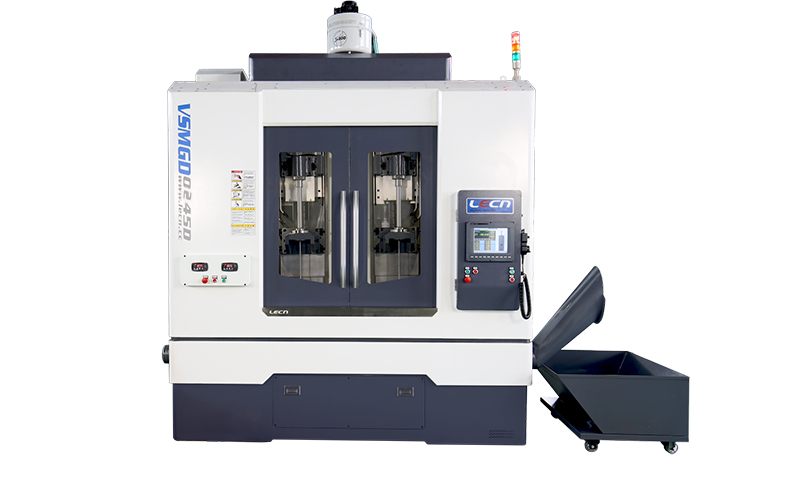
The spindle motor supplies the cutting power required to rotate the tool or workpiece.
Modern deep hole drilling machines often use high-efficiency AC spindle motors rather than older fixed-speed or inefficient motor systems. These motors can provide high torque across a wide operating range while reducing electrical losses.
Important energy-saving spindle features include:
High-efficiency motor classification
Direct-drive spindle design
Variable-speed control
Automatic load adjustment
Reduced mechanical transmission losses
Regenerative braking capability
Optimized acceleration and deceleration
Thermal monitoring
Traditional spindle systems may use belts, gears or multiple transmission components. These mechanisms generate friction, vibration and mechanical energy losses.
A direct-drive spindle connects the motor more directly to the spindle shaft, which can provide:
Higher transmission efficiency
Faster speed response
Lower mechanical losses
Reduced maintenance requirements
Lower noise and vibration
More precise speed control
Direct-drive technology can be particularly valuable in high-speed gun drilling and precision deep hole machining.
Different hole diameters, workpiece materials and cutting tools require different spindle speeds.
Variable-speed spindle control allows the machine to operate at the speed required by the current process rather than running at a constant maximum speed. This avoids unnecessary energy consumption and can also improve tool life.
Modern machines increasingly use servo motors for feed movement instead of conventional hydraulic or fixed-speed drive systems.
Servo-driven axes provide precise movement only when commanded by the CNC system. When the axis is not moving, energy consumption can be significantly reduced.
Benefits of servo feed systems include:
Accurate feed-rate control
Lower idle energy consumption
Fast positioning
Reduced hydraulic power requirements
Improved drilling consistency
Better acceleration control
Automatic load adaptation
Reduced mechanical wear
Deep hole drilling requires a stable and accurately controlled feed rate. Excessive feed can overload the tool, while insufficient feed can cause rubbing, poor chip formation and unnecessary cycle time.
Servo control helps maintain the optimum feed for each stage of the drilling cycle.
When a machine axis or spindle decelerates, it generates kinetic energy.
In a conventional drive system, this energy may be converted into heat through braking resistors. Regenerative drive technology can recover part of the braking energy and return it to the machine’s electrical system or factory power network.
Regeneration may be used during:
Spindle deceleration
Rapid axis stopping
Vertical axis lowering
Frequent acceleration and deceleration cycles
Automatic loading operations
The energy savings from regeneration depend on the machine configuration and operating cycle. It is generally more beneficial in machines with frequent movement and repeated speed changes.
Deep hole drilling requires coolant to reach the cutting edge, remove heat and transport chips out of the hole.
Gun drilling, BTA drilling and ejector drilling may require substantial coolant flow and pressure. Operating the coolant pump continuously at maximum power wastes energy when full pressure is unnecessary.
Modern systems use variable-frequency drives and intelligent pressure control to match coolant output to actual process demand.
A variable-frequency drive adjusts pump speed according to the required flow and pressure.
The coolant system can automatically reduce output during:
Tool positioning
Machine setup
Hole entry
Tool withdrawal
Measurement cycles
Loading and unloading
Machine idle periods
During active drilling, the system supplies the pressure required for the selected tool diameter, drilling depth and workpiece material.
This demand-based operation can significantly reduce coolant pump energy consumption.
Sensors can continuously measure coolant pressure and flow.
The CNC system can detect:
Insufficient coolant supply
Filter blockage
Pump inefficiency
Coolant leakage
Tool channel obstruction
Incorrect pressure settings
Maintaining the correct coolant condition prevents the machine from consuming additional energy while operating under inefficient or unstable cutting conditions.
Coolant filtration is essential in deep hole drilling because chips must be removed before the fluid is recirculated.
Contaminated coolant may cause:
Tool wear
Poor surface quality
Pump damage
Restricted coolant channels
Unstable pressure
Increased heat
Reduced drilling accuracy
Modern filtration systems can reduce energy consumption through:
Automatic filter cleaning
Variable-speed pumps
Demand-controlled circulation
Efficient chip separation
Low-pressure return systems
Coolant level monitoring
Optimized filter media use
A well-designed filtration system maintains clean coolant without operating every pump continuously at maximum output.
Energy efficiency also involves reducing the resources required to support machining.
Modern deep hole drilling machines often include closed-loop coolant systems that collect, filter, cool and reuse cutting fluid.
Benefits include:
Reduced coolant replacement
Lower fluid purchasing costs
Less wastewater generation
Reduced disposal requirements
More stable coolant concentration
Improved cutting performance
Lower environmental impact
Automatic concentration monitoring can help maintain the correct coolant mixture. An incorrect concentration may increase friction, reduce cooling efficiency and shorten tool life.
Deep hole drilling generates heat at the cutting zone, spindle and coolant pump.
Excessive temperature variation may cause:
Hole diameter variation
Straightness errors
Tool expansion
Machine structure deformation
Coolant degradation
Reduced bearing life
Traditional chillers may operate continuously, even when full cooling capacity is unnecessary.
Modern machines use demand-based cooling systems that adjust compressor or pump output according to actual coolant temperature.
Energy-efficient cooling features may include:
Inverter-controlled compressors
Variable-speed fans
Temperature sensors
Adaptive cooling capacity
Heat exchanger optimization
Automatic standby operation
Coolant temperature monitoring
The objective is to maintain a stable process temperature while using only the cooling energy required.
A machine can consume a substantial amount of electricity while waiting for material, an operator or the next production order.
Automatic standby functions reduce power consumption when the machine is inactive.
Depending on the configured idle period, the control system may automatically reduce or stop:
Spindle cooling
Hydraulic pumps
Coolant circulation
Chip conveyors
Work-area lighting
Mist extraction
Compressed-air supply
Display brightness
Auxiliary motors
The CNC and safety systems remain active so that production can restart quickly.
A well-designed standby mode should reduce energy consumption without creating excessive restart delays or thermal instability.
For factories operating multiple shifts, automatic shutdown scheduling prevents machines from remaining fully powered after production ends.
The machine can be programmed to:
Enter standby after a defined idle period
Shut down auxiliary systems after batch completion
Stop coolant circulation after temperature stabilization
Power down lighting and extraction systems
Start warm-up before the next shift
Record shutdown and restart times
Scheduled operation reduces energy waste caused by machines being left running overnight, during meal breaks or between production orders.
Hydraulic systems may be used for workpiece clamping, guide bush movement, steady-rest adjustment and other machine functions.
A conventional hydraulic pump may run continuously at a fixed speed, generating heat and consuming electricity even when no hydraulic movement is required.
Modern deep hole drilling machines may use:
Servo hydraulic pumps
Variable-displacement pumps
Accumulator-assisted systems
Automatic pressure reduction
Intermittent pump operation
Pressure-based motor control
A servo hydraulic system supplies flow only when the machine requires hydraulic movement. During stable clamping, the pump can operate at lower output or stop temporarily while maintaining pressure.
This reduces both electricity use and heat generation.
Compressed air is convenient but relatively expensive to produce.
Deep hole drilling machines may use compressed air for:
Tool cleaning
Workpiece cleaning
Sensor protection
Pneumatic clamping
Chip removal
Automatic doors
Mist control
Modern machines can reduce compressed-air consumption through:
Timed air pulses
Pressure regulation
Leak detection
Automatic shutoff valves
More efficient nozzles
Mechanical or hydraulic alternatives
Air use only during required cycle stages
Continuous air blowing should be avoided unless it is essential to the process.
Deep hole drilling produces long chips or segmented chips that must be removed efficiently.
Chip conveyors and separation equipment may consume unnecessary energy if they run continuously.
Modern machines can activate the chip conveyor based on:
Actual drilling time
Chip accumulation level
Coolant contamination
Programmed intervals
Conveyor load
Sensor feedback
Intermittent conveyor operation reduces energy consumption and mechanical wear while maintaining a clean machining area.
Machine technology alone cannot guarantee energy-efficient production. Cutting parameters must also be optimized.
Important parameters include:
Spindle speed
Feed rate
Coolant pressure
Coolant flow
Tool geometry
Cutting edge condition
Guide pad condition
Pecking or continuous-feed strategy
Entry and withdrawal speed
An inefficient process may consume more energy because of longer machining time, unstable chip formation and frequent tool replacement.
The most energy-efficient settings are not always the lowest spindle speed or feed rate. A productive and stable process often reduces the energy consumed per hole.
For example, increasing feed within the safe cutting range may shorten the cycle enough to reduce total machine energy consumption.
Adaptive feed control uses spindle load, torque, vibration or cutting-force information to adjust the drilling feed automatically.
When the cutting condition is stable, the system may increase feed within approved limits. When the tool encounters higher resistance, the system reduces feed to prevent overload.
Benefits include:
Shorter cycle times
Lower risk of tool breakage
More consistent spindle load
Better chip formation
Reduced energy waste
Improved process reliability
Adaptive control is particularly useful when material hardness or stock condition varies between workpieces.
A worn or damaged deep hole drilling tool requires more power and produces additional heat.
Continuing to drill with an unsuitable tool may result in:
Higher spindle load
Poor chip evacuation
Increased coolant demand
Reduced hole quality
Tool breakage
Workpiece scrap
Longer machining time
Modern machines monitor tool condition using:
Spindle power
Motor current
Feed force
Torque
Vibration
Acoustic signals
Coolant pressure
Cycle-time variation
The system can alert the operator or stop the process before excessive energy and material are wasted.
Tool life management software records the number of holes, total drilling depth or operating time for each tool.
It can help manufacturers:
Replace tools at the correct interval
Avoid premature tool replacement
Prevent unexpected tool failure
Compare tool performance
Identify inefficient cutting parameters
Plan tool inventory
Reduce production interruptions
Using a tool for too long increases energy consumption and quality risk. Replacing it too early increases tooling costs and material waste.
Tool life management helps find the correct balance.
Modern CNC systems can reduce unnecessary machine movements.
Energy-efficient programming may include:
Shorter rapid-traverse paths
Optimized tool approach distance
Controlled acceleration
Reduced idle spindle time
Automatic coolant activation
Efficient tool retraction
Combined machining operations
Reduced workpiece repositioning
Although each saved movement may appear small, the cumulative energy and cycle-time reduction can be substantial in high-volume production.
Some modern deep hole drilling machines integrate tool changers or additional machining functions.
A workpiece may undergo:
Center drilling
Pilot-hole machining
Deep hole drilling
Counterboring
Chamfering
Threading
Measurement
Completing multiple operations on one machine can reduce:
Workpiece transportation
Repeated clamping
Setup time
Auxiliary equipment use
Floor-space requirements
Energy consumed by multiple machines
However, machine integration should be evaluated according to production volume and part complexity. An overly complex machine may not be economical for simple drilling tasks.
Automation can improve energy efficiency by reducing idle time between machining cycles.
Robotic or gantry loading systems can:
Load the next workpiece immediately
Maintain consistent cycle intervals
Reduce spindle waiting time
Support unattended production
Reduce manual handling
Improve machine utilization
Higher machine utilization does not necessarily mean lower total electricity consumption, but it can reduce the energy consumed per finished component.
Automation should coordinate with machine standby functions. For example, if no new workpiece is available, auxiliary systems should automatically enter a reduced-energy state.
Machine builders can reduce axis energy consumption by optimizing moving structures.
Lightweight but rigid components require less energy during acceleration and deceleration.
Design strategies may include:
Finite element structural optimization
High-strength lightweight materials
Hollow structural components
Reduced moving mass
Optimized carriage geometry
Balanced axis design
The structure must remain sufficiently rigid to maintain hole straightness and vibration stability. Energy savings should never compromise machining accuracy.
Friction affects both energy consumption and axis positioning accuracy.
Modern deep hole drilling machines may use:
Linear roller guideways
Precision ball screws
Hydrostatic guideways
Low-friction seals
Efficient spindle bearings
Automatic lubrication systems
Lower friction reduces the force required for movement and minimizes heat generation.
Automatic lubrication supplies the correct amount of lubricant at controlled intervals. Both insufficient and excessive lubrication can reduce machine efficiency.
Lighting represents a relatively small portion of total machine energy use, but LED systems still contribute to overall efficiency.
Compared with traditional work lights, LEDs generally provide:
Lower electricity consumption
Longer service life
Reduced heat output
Better visibility
Lower maintenance requirements
Instant startup
Automatic lighting controls can switch off the work-area lights during extended idle periods.
Oil mist and coolant aerosol control are important for workplace safety and equipment cleanliness.
Traditional extraction systems may operate continuously at full power. Modern mist collectors can use:
Variable-speed fans
Filter condition monitoring
Demand-based extraction
Automatic standby
High-efficiency motors
Low-pressure-loss filter designs
The extraction rate should remain sufficient to protect workers while avoiding unnecessary fan energy consumption.
Many modern deep hole drilling machines can monitor and display energy use.
The system may record:
Total electricity consumption
Energy per drilling cycle
Energy per workpiece
Spindle energy
Coolant pump energy
Idle energy consumption
Standby duration
Peak demand
Auxiliary system consumption
This information helps production managers identify inefficient processes and compare machines, shifts, operators or production orders.
Without measurement, energy-saving opportunities can be difficult to identify.
Machines connected to a manufacturing execution system can provide energy and production data to factory management software.
Manufacturers can analyze:
Energy consumption by product
Machine utilization
Idle time
Cycle efficiency
Tool life
Scrap rate
Coolant use
Maintenance condition
Combining energy data with production data provides a more meaningful performance measurement than total electricity consumption alone.
A machine producing more acceptable parts with slightly higher hourly power may be more efficient per component than a lower-power but slower machine.
Machine wear can gradually increase energy consumption.
Examples include:
Worn spindle bearings
Blocked coolant filters
Pump deterioration
Misaligned guideways
Lubrication problems
Hydraulic leakage
Damaged seals
Contaminated coolant
Unbalanced rotating parts
Predictive maintenance systems analyze sensor data to identify these conditions before they cause machine failure.
Maintenance performed at the correct time can restore efficiency and prevent energy waste.
Deep hole drilling performance depends heavily on the cutting tool and support system.
A well-designed gun drill, BTA tool or ejector drill can provide:
Efficient chip formation
Lower cutting resistance
Stable guidance
Reduced friction
Improved coolant flow
Longer tool life
Better hole straightness
Guide pads must support the tool while minimizing friction against the hole wall.
Incorrect tool geometry or worn guide pads increase spindle power, heat and coolant requirements.
Advanced machine suppliers may use process simulation to determine suitable cutting conditions before production begins.
Simulation can help evaluate:
Tool diameter
Spindle speed
Feed rate
Coolant requirement
Expected torque
Chip evacuation
Cycle time
Machine capacity
Digital optimization reduces trial machining, unnecessary setup time and material waste.
For repetitive production, verified process recipes can be stored in the CNC and recalled when the same component is manufactured again.
An oversized machine may consume more energy because it uses larger motors, pumps and auxiliary systems than the application requires.
An undersized machine may also be inefficient if it operates continuously at its performance limit or requires reduced cutting parameters.
Buyers should select a machine according to:
Maximum hole diameter
Maximum drilling depth
Workpiece dimensions
Workpiece weight
Required spindle torque
Production volume
Tooling method
Material type
Accuracy requirements
Future product plans
The machine should have a reasonable capacity margin without being unnecessarily large.
Gun drilling is commonly used for smaller-diameter precision holes with high depth-to-diameter ratios.
Energy-saving features for gun drilling machines may include:
High-efficiency high-speed spindles
Variable-flow coolant systems
Optimized guide bush design
Adaptive feed control
Precision tool monitoring
Reduced-friction spindle bearings
Automatic standby
Efficient coolant filtration
Because gun drilling often uses relatively high coolant pressure, intelligent pump control can provide meaningful energy savings.
BTA drilling is commonly selected for larger-diameter and high-productivity deep holes.
The process typically requires substantial coolant flow and cutting power.
Energy-saving BTA machine features may include:
High-torque efficient spindle motors
Variable-speed coolant pumps
Chip-flow monitoring
Demand-controlled hydraulic systems
Optimized tool engagement
Automatic load control
Energy recovery during spindle deceleration
Efficient coolant separation
For BTA drilling, the relationship among spindle power, feed rate, coolant flow and chip evacuation should be optimized as a complete system.
Machine buyers should request more than a general statement that the equipment is energy efficient.
Useful supplier information may include:
Motor efficiency ratings
Standby power consumption
Typical operating power
Coolant pump control method
Hydraulic pump configuration
Chiller control method
Regenerative drive availability
Energy-monitoring functions
Compressed-air requirements
Expected cycle time
Energy consumption during a sample process
A practical drilling test can provide the most useful comparison.
The supplier should process an actual or representative workpiece and record:
Hole diameter
Hole depth
Material
Tool type
Spindle speed
Feed rate
Cycle time
Coolant pressure
Total energy consumed
Tool wear
Final hole quality
Comparing only the machine’s rated motor power can be misleading.
A more useful measurement is the energy consumed per acceptable hole or finished component.
Consider the following example:
Machine A uses lower spindle power but requires a long drilling cycle and several manual pauses. Machine B has a higher rated spindle motor but completes the hole faster, automatically controls the coolant pump and minimizes idle time.
Machine B may consume less total energy per hole despite its higher rated power.
Manufacturers should therefore evaluate:
Machining energy
Idle energy
Setup energy
Coolant energy
Tool replacement frequency
Scrap and rework
Total cycle time
Tool life is closely connected to energy efficiency.
A stable drilling process reduces the environmental and financial costs associated with:
Tool manufacturing
Tool transportation
Machine downtime
Scrap components
Coolant contamination
Tool regrinding
Replacement inventory
Energy-saving process design should therefore consider both electricity use and consumable use.
A cutting condition that slightly increases spindle power but substantially extends tool life may provide a lower total production cost.
Deep hole drilling operations may waste energy because of:
High-pressure pumps should reduce output during non-cutting periods.
Standby and automatic shutdown functions should be activated.
Low feed rates can increase cycle time without improving quality.
Tool wear increases cutting resistance and spindle power.
Restricted coolant flow causes pumps to operate inefficiently.
Variable-demand hydraulic systems can reduce unnecessary motor operation.
Leaks and continuous air blowing increase factory utility costs.
Frequent machine warm-up, shutdown and product changes may reduce efficiency.
Using a large machine for small components can increase auxiliary power consumption.
| Evaluation Area | Energy-Saving Feature to Check |
|---|---|
| Spindle | High-efficiency or direct-drive motor |
| Feed axes | Servo-controlled drives |
| Braking | Regenerative energy recovery |
| Coolant pump | Variable-frequency control |
| Coolant delivery | Pressure and flow matched to tool demand |
| Filtration | Automatic and demand-controlled operation |
| Chiller | Inverter-controlled cooling |
| Hydraulics | Servo or variable-displacement pump |
| Compressed air | Timed pulses and automatic shutoff |
| Chip conveyor | Intermittent or sensor-based operation |
| Idle periods | Automatic standby and sleep modes |
| Lighting | LED and automatic shutoff |
| Tooling | Tool condition and life monitoring |
| CNC control | Optimized movement and cycle programming |
| Data monitoring | Energy per cycle or workpiece |
| Maintenance | Predictive monitoring and service alerts |
Before purchasing a modern deep hole drilling machine, buyers should ask:
What is the machine’s typical power consumption during drilling?
What is its power consumption in standby mode?
Does the coolant pump use variable-frequency control?
Can coolant pressure and flow be adjusted automatically?
Does the machine use servo-driven feed axes?
Is spindle braking energy recovered?
Can hydraulic pumps stop during inactive periods?
How is coolant temperature controlled?
Can the machine monitor energy consumption per cycle?
Are chip conveyors and mist collectors demand controlled?
Does the CNC include automatic standby settings?
Can tool wear be detected through spindle load monitoring?
What compressed-air pressure and flow are required?
Can the supplier provide energy data from an actual drilling test?
How does the machine reduce energy use without extending cycle time?
The spindle, high-pressure coolant pump, hydraulic system and coolant chiller are usually among the largest energy consumers. The exact distribution depends on the hole diameter, drilling method and machine design.
No. A lower-power spindle may require slower machining or may operate near its maximum load. Energy per finished hole is a more useful measurement than motor power alone.
It changes pump speed according to the required coolant pressure and flow. The pump does not need to run at full output during tool positioning, retraction or idle periods.
Poorly configured standby functions can affect thermal stability. Modern machines coordinate standby and warm-up cycles so that energy is reduced without causing excessive temperature variation.
Servo drives generally consume energy according to movement demand and provide accurate feed control. Hydraulic systems may still be appropriate for certain heavy-duty applications, especially when equipped with variable-demand pumps.
A worn tool increases cutting resistance and cycle instability. Tool monitoring detects abnormal load or vibration before excessive energy, tooling and workpiece material are wasted.
Coolant recycling primarily reduces fluid consumption and waste, but clean and temperature-controlled coolant also supports efficient pumping, stable cutting and longer tool life.
Not always. Excessive speed or feed can cause tool damage and scrap. The most efficient process balances cycle time, tool life, quality and total energy consumption.
Some machines can be upgraded with variable-frequency pumps, efficient motors, standby controls, LED lighting, energy meters and improved filtration. Compatibility should be evaluated by the machine manufacturer or a qualified engineer.
Process the same component under equivalent quality requirements and compare energy per acceptable part, cycle time, tool life, coolant use, scrap rate and maintenance requirements.
Energy-saving deep hole drilling is achieved through the coordinated optimization of machine design, cutting technology and production management.
Modern deep hole drilling machines can reduce energy consumption through high-efficiency spindle motors, servo-driven axes, regenerative braking, intelligent coolant pumps, demand-controlled hydraulics, automatic standby modes and real-time process monitoring.
However, individual energy-saving components should not be evaluated in isolation. A machine with efficient motors may still consume excessive resources if its drilling cycle is unstable, its coolant system runs continuously or its tools wear prematurely.
Manufacturers should evaluate the total energy required to produce one acceptable hole. This includes drilling time, idle operation, coolant circulation, tool consumption, scrap and auxiliary equipment use.
By selecting a correctly sized machine, optimizing drilling parameters and using intelligent control systems, manufacturers can reduce operating costs while maintaining the hole straightness, dimensional accuracy, surface finish and production reliability required by modern industrial applications.

Previous: None
Next: None