Sep. 14, 2026
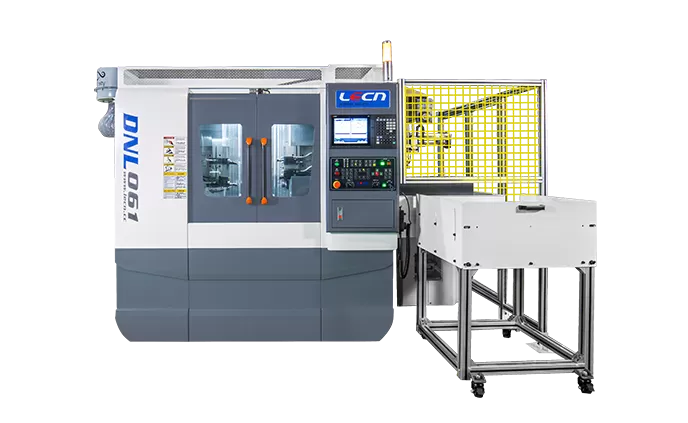
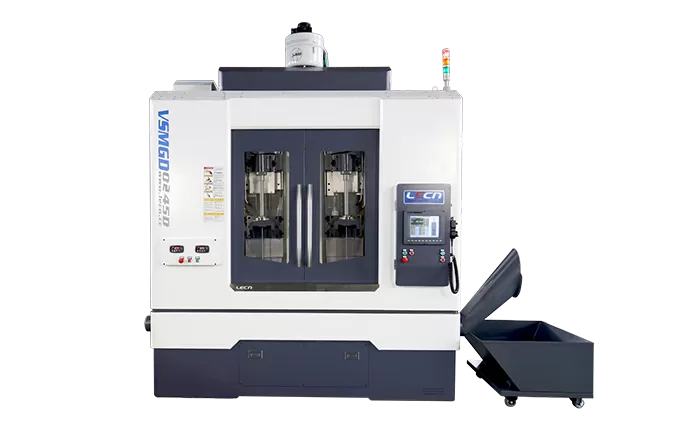
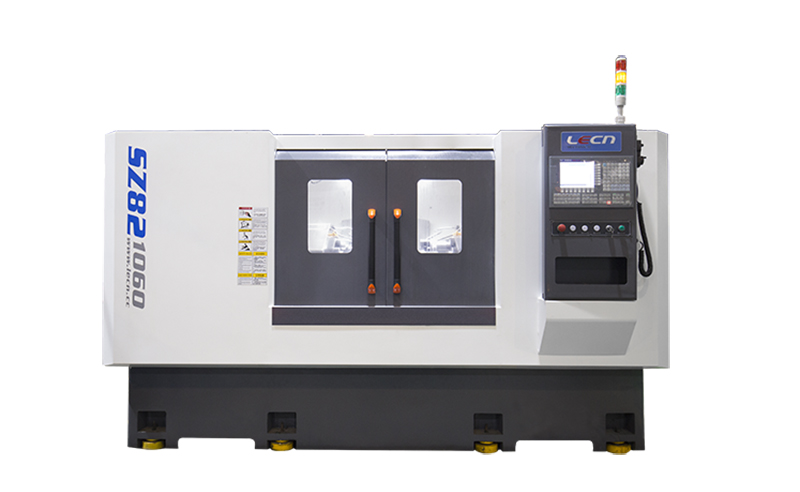
A facing and centering machine is a specialized machine tool used to prepare the ends of shafts, bars, tubes, forgings, and other rotational or axis-symmetrical workpieces before subsequent machining operations.
The basic process combines two important operations. Facing creates a flat and accurately positioned end surface, while centering produces a center hole or reference feature at the required position. Depending on the machine configuration, additional operations such as chamfering, drilling, boring, milling, tapping, or turning can also be integrated into the same setup.
This makes facing and centering equipment particularly valuable for manufacturers producing large quantities of shafts and similar components. By machining both ends in one setup, manufacturers can reduce handling, improve repeatability, and establish reliable reference surfaces for subsequent turning, grinding, drilling, threading, or other operations.
Applications are found across automotive, motorcycle, electric motor, power transmission, agricultural machinery, construction equipment, pump and valve, railway, aerospace, and general engineering manufacturing.
Before looking at specific industries, it is useful to understand why the first machining operation matters.
A typical facing and centering process may include:
Loading the raw shaft, bar, tube, or forging.
Positioning and clamping the workpiece.
Facing one or both ends to establish flat reference surfaces.
Drilling or cutting the center holes.
Chamfering the edges when required.
Performing additional end machining such as boring, tapping, or milling.
Transferring the prepared workpiece to the next machining operation.
In a double-ended configuration, both ends can be processed simultaneously. This eliminates the need to machine one end, remove and reposition the part, and then process the opposite end.
The resulting center holes can then serve as reference points for subsequent machining and grinding operations.
This is especially important for long or slender shafts. If the initial reference is inaccurate, dimensional and alignment errors can propagate into later processes.
| Industry | Typical Workpieces | Common Applications |
|---|---|---|
| Automotive | Axle shafts, drive shafts, crankshafts, camshafts, gear shafts | End facing, center drilling, chamfering, end turning |
| Motorcycle | Drive shafts, transmission shafts, axle shafts | Double-end facing and centering |
| Electric Motor | Motor shafts, rotor shafts, spindle shafts | Shaft end preparation and center drilling |
| Power Transmission | Gear shafts, spline shafts, transmission shafts | Facing, centering, drilling, chamfering |
| Bearing | Bearing-related shafts and cylindrical components | Precision end preparation |
| Pumps & Valves | Pump shafts, valve stems, actuator shafts | Facing, center drilling, end machining |
| Agricultural Machinery | Drive shafts, axle components, transmission shafts | High-volume shaft preparation |
| Construction Machinery | Heavy shafts, pins, axles, transmission components | Heavy-duty end machining |
| Railway | Axles and large cylindrical components | Large-diameter end facing and centering |
| Aerospace | Precision shafts and rotational components | Controlled reference preparation |
| General Engineering | Bars, forgings, shafts, tubes | Flexible preparation for downstream machining |
The automotive industry is one of the most important applications for facing and centering machines.
Automotive manufacturers and Tier 1 and Tier 2 suppliers produce large quantities of shafts and axis-symmetrical components, making cycle time, repeatability, and automated handling important production considerations.
Facing and centering machines can be used for components such as:
Drive shafts
Axle shafts
Half shafts
Gear shafts
Camshafts
Crankshafts
Steering components
Transmission shafts
Differential-related shafts
CV joint-related shafts
Automotive machine-tool suppliers specifically list facing and centering equipment for crankshaft and camshaft manufacturing, while other equipment manufacturers identify automotive drive shafts and axles as major applications.
Drive shafts require accurate reference surfaces before subsequent turning, drilling, spline machining, grinding, and other processes.
A shaft facing and centering machine can prepare both ends of a shaft in one clamping operation.
This provides several production advantages:
Consistent shaft length reference
Accurate center-hole positioning
Reduced handling
Reduced setup time
Better repeatability between batches
Easier downstream CNC turning and grinding
For high-volume automotive production, these advantages become particularly important because even a small cycle-time reduction can have a significant effect on annual production capacity.
Crankshafts and camshafts involve multiple precision machining operations.
The initial facing and centering operation can establish the reference required for subsequent turning, milling, drilling, grinding, and other processes.
For these components, the machine must be designed around:
Workpiece length
Diameter variation
Forged or cast blank condition
Required center-hole geometry
Material hardness
Production volume
Downstream machining requirements
Some automotive production lines use dedicated facing and centering equipment as one stage within a larger automated machining system.
Motorcycle manufacturers also produce a large number of shafts and rotational components.
Typical applications include:
Transmission shafts
Drive shafts
Wheel axles
Counter shafts
Gear shafts
Steering-related shafts
Engine shafts
Compared with some heavy automotive components, motorcycle components may have smaller dimensions but can require high production efficiency.
A CNC facing and centering machine can process both ends of a shaft while maintaining controlled positioning.
For motorcycle component suppliers, the main benefits may include:
Short cycle times are important when producing large quantities of relatively small shaft components.
Consistent center-hole positioning provides a reliable datum for subsequent turning or grinding.
Automatic loading and unloading can reduce operator involvement in repetitive production.
CNC programs and interchangeable tooling can allow one machine to process different shaft specifications.
Electric motor production is another important application area.
Motors commonly use cylindrical shafts that require accurately machined ends.
Typical workpieces include:
Motor shafts
Rotor shafts
Spindle shafts
Fan motor shafts
Industrial motor shafts
Servo motor shafts
Generator shafts
A facing and centering operation can establish the reference for subsequent:
Turning
Grinding
Threading
Keyway machining
Spline machining
Bearing-seat machining
End drilling
For motor manufacturers, shaft concentricity and dimensional consistency are particularly important because the shaft must work together with bearings, rotors, couplings, gears, and other rotating components.
A properly positioned center hole can provide a stable reference during subsequent machining and grinding.
Electric motor and transmission manufacturers are among the documented applications for facing and centering equipment.
Gear manufacturing is not limited to cutting the gear teeth.
Many transmission components begin as cylindrical or forged shaft blanks that require accurate end preparation before subsequent operations.
Typical workpieces include:
Gear shafts
Spline shafts
Transmission shafts
Pinion shafts
Input shafts
Output shafts
Intermediate shafts
A facing and centering machine can establish accurate end references before:
CNC turning
Gear hobbing
Gear shaping
Spline machining
Threading
Grinding
Heat treatment and post-treatment finishing
For manufacturers producing large batches of gear shafts, integrating facing and centering into the front end of the production sequence can help create a stable datum for the rest of the machining process.
This is one reason facing and centering equipment is commonly associated with shaft, spline, and transmission-component production.
Bearings themselves are usually associated with rings and rolling elements rather than long shafts, but facing and centering machines can be relevant to the production of bearing-related shafts and cylindrical components.
Applications may include:
Bearing shafts
Spindle shafts
Rotor shafts
Support shafts
Precision cylindrical components
The initial facing operation establishes a controlled end surface, while center drilling provides a reference for later turning and grinding.
For components requiring multiple grinding operations, the quality of the initial center hole can have a direct effect on how the workpiece is supported during subsequent processing.
This makes the first machining operation an important part of the overall dimensional-control strategy.
Pump and valve manufacturers produce a wide range of shafts, stems, and cylindrical components.
Typical applications include:
Pump shafts
Impeller shafts
Valve stems
Actuator shafts
Drive shafts
Long cylindrical components
Depending on the component, a facing and centering machine may perform:
End facing
Center drilling
Chamfering
End boring
Drilling
Tapping
Turning
The ability to combine several end operations can be valuable when the component will subsequently undergo precision turning or grinding.
For manufacturers producing stainless steel, alloy steel, or other difficult-to-machine materials, machine configuration and tooling selection should be matched to the actual workpiece material and production requirements.
Agricultural equipment contains numerous rotating and load-bearing components.
Typical examples include:
Drive shafts
Axle shafts
Transmission shafts
PTO-related components
Gear shafts
Hydraulic system components
Long cylindrical pins and shafts
Agricultural machinery manufacturers often need to produce components in different dimensions depending on the machine platform.
A flexible facing and centering machine can therefore be useful when production involves multiple shaft diameters and lengths.
For these applications, manufacturers may prioritize:
Flexible workpiece ranges
Fast changeover
Robust clamping
High chip-removal capability
Reliable automatic loading
Low maintenance requirements
Double-ended machining is particularly useful when both ends require identical or complementary machining operations.
Agricultural machinery is among the industries in which double-head facing and centering machines are commercially applied.
Construction equipment uses heavier and larger components than many passenger vehicles.
Examples include:
Axle shafts
Transmission shafts
Drive shafts
Pins
Hydraulic-cylinder-related components
Large cylindrical shafts
Structural poles and similar round workpieces
Facing and centering machines for these applications may require significantly larger working envelopes than standard automotive machines.
Important machine considerations include:
Maximum workpiece diameter
Maximum workpiece length
Workpiece weight
Clamping force
Spindle power
Cutting-tool capacity
Chip removal
Machine rigidity
For large components, the objective is not simply to increase cutting speed. The machine must remain rigid and stable while maintaining accurate end geometry.
Specialized facing and centering machines are available for medium- to large-size components such as drive shafts, axles, and long cylindrical workpieces. Some systems are designed for workpieces several meters long.
Railway manufacturing involves large, heavy, and highly loaded rotating components.
Potential applications for facing and centering equipment include:
Railway axles
Wheelset-related shafts
Large cylindrical shafts
Bogie-related components
Other long rotational components
The scale of railway components means that conventional small shaft machines may not be appropriate.
A railway-oriented facing and centering machine may require:
Large work envelope
High rigidity
Heavy-duty clamping
High spindle torque
Stable long-workpiece support
Automatic loading capability
Accurate end reference generation
For long shafts, the initial center hole can be particularly important because subsequent turning and grinding processes may rely on the established axis.
Aerospace manufacturing places significant emphasis on dimensional accuracy, repeatability, traceability, and process control.
Facing and centering machines can be applied to selected rotational and axis-symmetrical components such as:
Precision shafts
Actuator components
Landing-gear-related cylindrical parts
Engine-related shaft components
Aerospace mechanical components
Not every aerospace component is suitable for a conventional facing and centering process. The machine must be selected according to the actual component drawing, material, tolerance, and manufacturing route.
For aerospace applications, manufacturers may place greater emphasis on:
CNC control
Positioning accuracy
Thermal stability
Tool condition
Process monitoring
Repeatability
Inspection integration
Facing and centering equipment is identified as an application for precision aerospace parts in machine-tool industry materials.
The application of facing and centering machines is not limited to mass automotive production.
General engineering companies and job shops can also use this equipment for:
Shaft blanks
Tubes
Bars
Forgings
Pins
Bushings
Machine components
Special-purpose shafts
The major advantage in this environment is flexibility.
A machine may be configured to support several operations, including:
Facing
Center drilling
Chamfering
Boring
Milling
Tapping
Turning
Reaming
Some modern facing and centering systems are designed to perform a wider range of end machining operations rather than acting only as preliminary facing machines.
This can be useful when manufacturers want to consolidate multiple operations into one production cell.
Facing and centering machines are also widely associated with the preparation of tubes, bars, billets, and forgings.
The raw material may arrive with:
Uneven forged ends
Saw-cut surfaces
Burrs
Scale
Casting or forging irregularities
Inaccurate end geometry
Facing removes unwanted material and establishes a controlled end surface.
Centering then creates a defined reference for subsequent machining.
This is particularly useful for components that will later be processed by CNC lathes, grinders, deep-hole drilling machines, or other equipment.
Manufacturers of dedicated facing and centering equipment specifically position these machines for bars, billets, pressed shafts, tubes, and forgings.
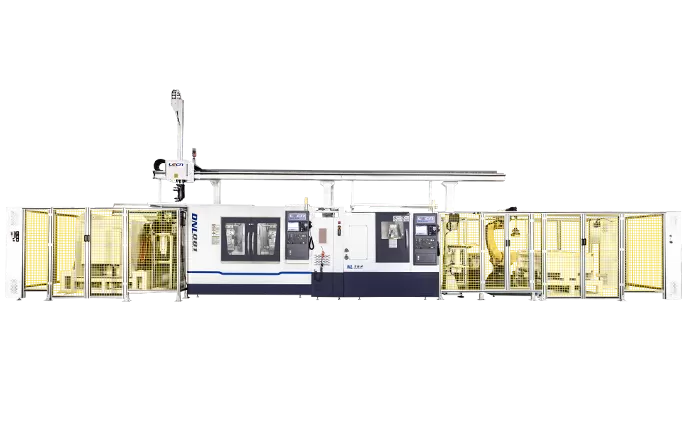
Across these industries, one of the biggest developments is the transition from standalone machines to automated facing and centering production cells.
A modern production system may include:
Raw Material Loading → Automatic Positioning → Double-End Facing → Center Drilling → Chamfering → Inspection → Transfer to CNC Turning → Grinding
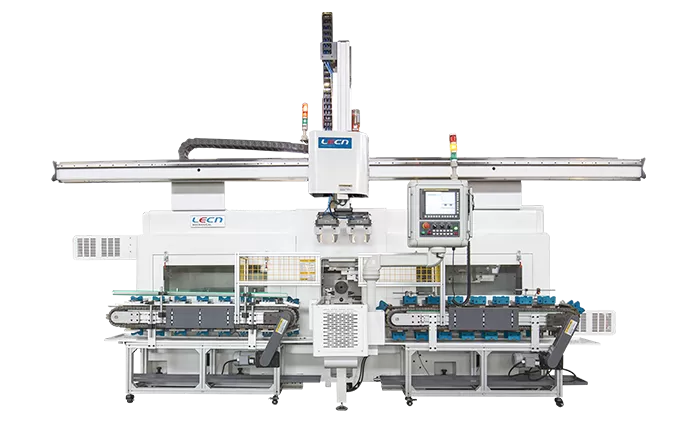
Automation can include:
Robot loading
Gantry loading
Automatic workpiece positioning
Hydraulic or pneumatic clamping
Automatic tool changing
Chip conveyors
Coolant filtration
Automatic gauging
Reject-part separation
Production data collection
Facing and centering machines can be configured with automatic loading and integrated into larger machining lines, particularly where shaft components are manufactured continuously.
The biggest production advantage of a double-ended machine is not simply that two operations happen at once.
It is the reduction of unnecessary repositioning.
With conventional machining:
End A → Reposition → End B
With a double-ended facing and centering machine:
End A + End B → One Clamping
This can reduce:
Handling time
Setup time
Positioning variation
Operator intervention
Work-in-process movement
For high-volume shaft production, these improvements can contribute directly to higher productivity.
The value of a facing and centering machine is often realized in the processes that follow it.
A properly prepared workpiece can provide better conditions for:
The center holes provide reliable support and reference for turning long shafts.
Grinding between centers can use the established center holes to maintain the rotational axis.
Accurate end preparation helps maintain the required relationship between threaded and cylindrical features.
A controlled datum can improve positioning consistency during subsequent gear or spline operations.
Centering can provide a controlled starting position for deep-hole drilling.
Accurate reference surfaces make dimensional inspection and process control more repeatable.
This is why the facing and centering operation should not be treated as an isolated machining step. It can establish the reference system for a large part of the subsequent manufacturing process.
Different industries have very different production requirements.
A machine suitable for motorcycle shafts may not be appropriate for railway axles or large construction-equipment components.
Before selecting equipment, manufacturers should evaluate:
Define:
Minimum diameter
Maximum diameter
Minimum length
Maximum length
Workpiece weight
Shaft geometry
Consider whether the workpiece is:
Carbon steel
Alloy steel
Stainless steel
Cast material
Forged material
Heat-treated material
Other engineering alloys
Material affects tooling, spindle power, cutting parameters, and tool life.
Do you only need:
Facing
Center drilling
Or does the production process also require:
Chamfering
Boring
Milling
Tapping
Threading
Drilling
End turning
A multifunction configuration may eliminate additional downstream operations.
High-volume automotive production may prioritize:
Short cycle time
Automatic loading
High machine utilization
Tool-life monitoring
Inline inspection
Small-batch production may instead prioritize:
Flexibility
Quick setup
Easy programming
Wide workpiece range
Manufacturers should determine whether the machine needs to work as:
Standalone equipment
Semi-automatic cell
Robot-loaded cell
Gantry-loaded line
Fully integrated production line
The most important question is often:
What happens after facing and centering?
The answer determines the required center-hole geometry, dimensional accuracy, surface condition, and datum strategy.
Facing and centering machines have applications across a wide range of industries because many manufacturing processes begin with a simple requirement: create accurate, repeatable reference surfaces on the ends of a cylindrical workpiece.
In automotive manufacturing, the technology supports high-volume production of shafts, axles, crankshafts, camshafts, and transmission components.
In electric motor and power transmission manufacturing, it provides a controlled starting point for shaft turning, grinding, spline machining, and gear-related operations.
In agricultural, construction, railway, and other heavy industries, larger and more robust machines can process long or heavy cylindrical components.
For aerospace and precision engineering, machine configuration must be matched more closely to the component's tolerance and manufacturing process.
The most suitable facing and centering machine is therefore determined not simply by the industry name, but by the combination of workpiece geometry, material, machining operations, tolerance, production volume, cycle time, and automation requirements.
For manufacturers producing shafts, axles, tubes, bars, forgings, and other cylindrical components, a properly configured facing and centering machine can become an important first operation in a highly automated machining process—establishing the reference accuracy that subsequent manufacturing operations depend on.
Major applications include automotive, motorcycle, electric motor, power transmission, agricultural machinery, construction equipment, pumps and valves, railway, aerospace, bearing-related manufacturing, and general engineering.
Common workpieces include shafts, axle shafts, drive shafts, gear shafts, spline shafts, crankshafts, camshafts, motor shafts, tubes, bars, billets, forgings, and other cylindrical components.
Facing creates a flat and controlled end surface, while centering generally creates a center hole or reference feature used to establish the workpiece axis for subsequent machining.
Yes. Double-ended configurations are designed to machine both ends in one setup, which can reduce handling and positioning time compared with processing each end separately.
Depending on the machine design, they can also perform chamfering, drilling, boring, milling, tapping, threading, and end turning.
Yes. They can be integrated with robots, gantry loaders, conveyors, automatic clamping systems, gauging equipment, chip conveyors, and other production-line equipment.
Start with the workpiece drawing and define the diameter, length, weight, material, required end geometry, center-hole requirements, tolerances, production volume, target cycle time, and downstream machining processes. These factors should determine the machine configuration rather than selecting equipment based only on nominal machine capacity.

Previous: None
Next: None