Jun. 24, 2026
Factory floor space is one of the most valuable assets in modern manufacturing. As manufacturers pursue higher productivity, automation, and lean production strategies, optimizing the layout of equipment becomes essential. For companies that process shafts, cylindrical components, stepped parts, and other long workpieces, proper placement of a Facing and Centering Machine can significantly improve production efficiency while reducing unnecessary movement, labor costs, and operational bottlenecks.
A well-planned factory layout not only maximizes available space but also streamlines material flow, enhances worker safety, and supports future automation upgrades.
This article explores practical strategies for integrating Facing and Centering Machines into factory environments while optimizing production space.
Facing and Centering Machines are often positioned at the beginning of shaft manufacturing processes because they prepare workpieces for subsequent turning, grinding, drilling, and finishing operations.
Poor equipment placement can create several challenges:
Excessive material transportation
Production bottlenecks
Operator congestion
Reduced productivity
Increased labor costs
Safety risks
Difficult automation integration
An optimized layout helps manufacturers establish a smooth and continuous production flow.
Key benefits include:
Faster production cycles
Improved equipment utilization
Reduced material handling
Better workplace safety
Lower operating costs
Easier future expansion
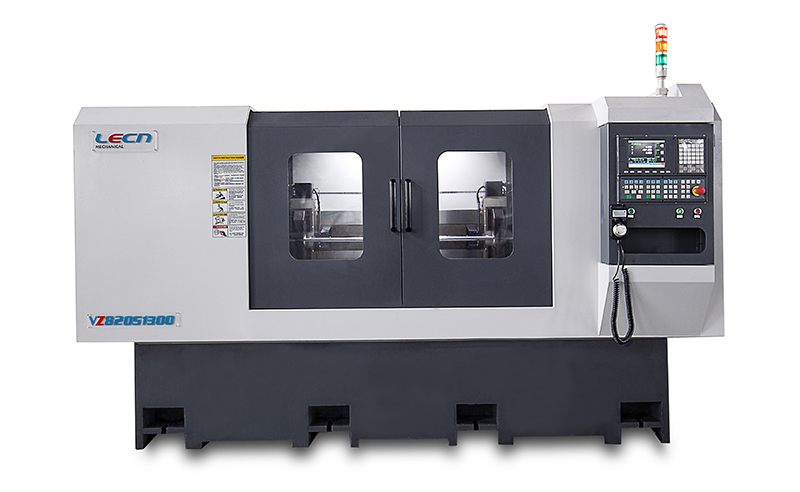
Before deciding where to place a Facing and Centering Machine, manufacturers should map out the entire production process.
A typical shaft production workflow may include:
Raw Material Storage
Steel bars, forgings, or castings are stored and prepared for processing.
Cutting Process
Raw materials are cut to the required dimensions.
Facing and Centering
Both ends of the workpiece are machined simultaneously.
CNC Turning
Workpieces undergo precision turning operations.
Milling and Drilling
Additional features are added.
Grinding
Final dimensional accuracy and surface finish are achieved.
Inspection
Quality control procedures verify specifications.
Packaging and Shipping
Finished products are prepared for delivery.
The Facing and Centering Machine should be positioned strategically to minimize travel distances between each process.
One of the most effective factory layout strategies is a linear arrangement.
Production should move in one direction without unnecessary backtracking.
Example:
Raw Material → Cutting → Facing and Centering → CNC Turning → Grinding → Inspection → Packaging
Advantages include:
Reduced transportation time
Simplified logistics
Easier production management
Improved efficiency
Reduced risk of workpiece damage
A straight-line layout is especially beneficial for high-volume production environments.
Facing and Centering Machines frequently process long workpieces ranging from 300 mm to 3000 mm or more.
Manufacturers should reserve sufficient loading and unloading space.
Considerations include:
Front Loading Area
Allow enough space for operators or automation systems to place raw materials.
Rear Discharge Area
Ensure smooth transfer to downstream processes.
Side Maintenance Clearance
Leave adequate space for servicing and machine maintenance.
Robot Movement Zones
Reserve additional areas for automated systems.
Avoid placing machines too close together, as this may restrict movement and reduce efficiency.
Material movement often consumes a significant portion of production time.
Effective layouts minimize unnecessary transportation.
Recommended strategies include:
Position Machines Sequentially
Place related machines adjacent to one another.
Reduce Forklift Traffic
Limit crossing paths to improve safety.
Use Roller Conveyors
Automate workpiece transfer whenever possible.
Create Dedicated Material Lanes
Separate incoming and outgoing materials.
The objective is to create uninterrupted material flow throughout the factory.
Many manufacturers eventually upgrade their production lines with automation systems.
Planning for automation early avoids costly future modifications.
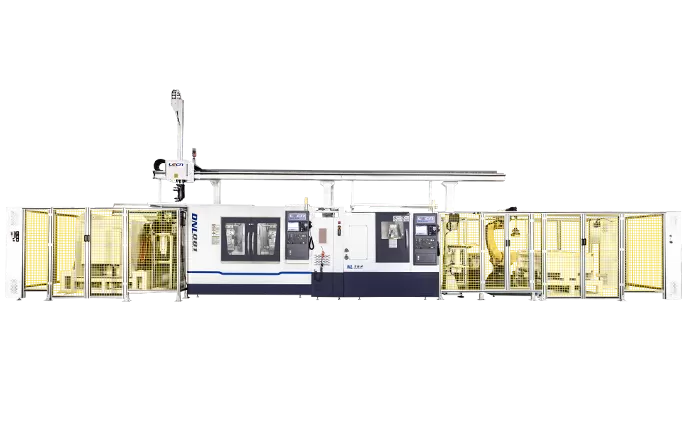
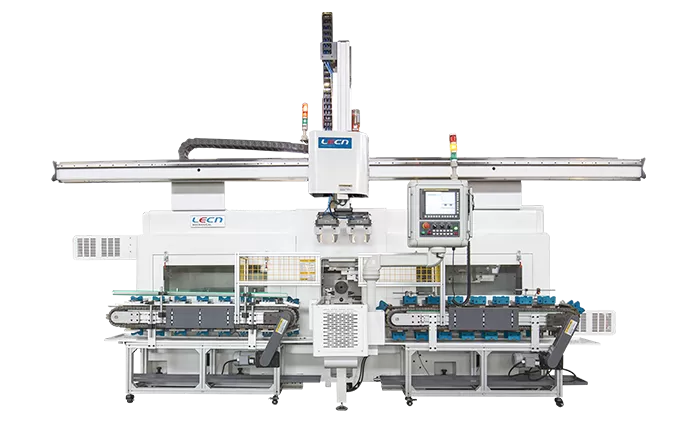
Facing and Centering Machines can easily integrate with:
Truss Robots
Ideal for high-volume shaft production.
Articulated Robots
Suitable for flexible manufacturing environments.
Automatic Conveyors
Reduce manual handling.
Automated Storage Systems
Improve inventory management.
Smart Manufacturing Systems
Connect production data to MES and ERP systems.
Reserve adequate space around machines for these upgrades.
Even in automated environments, operator efficiency remains important.
Proper workstation design should include:
Easy Machine Access
Controls should be accessible without obstruction.
Clear Visibility
Operators should easily monitor machine status.
Ergonomic Positioning
Reduce unnecessary walking and repetitive movements.
Organized Tool Storage
Keep frequently used tools nearby.
Safety Zones
Separate operators from moving equipment.
Efficient operator placement can significantly improve productivity.
Factory optimization is not limited to floor space.
Vertical space can also improve efficiency.
Consider installing:
Overhead material racks
Tool storage cabinets
Cable management systems
Suspended conveyor systems
Lighting systems
Utilizing vertical space keeps the production floor organized and uncluttered.
Maintenance accessibility is often overlooked during factory planning.
Insufficient maintenance space can increase downtime.
Ensure enough room for:
Electrical cabinet access
Hydraulic system inspection
Chip conveyor maintenance
Lubrication servicing
Component replacement
Preventive maintenance becomes much easier with proper planning.
Facing and Centering Machines generate significant amounts of metal chips.
Efficient chip removal prevents production interruptions.
Recommended solutions include:
Automatic Chip Conveyors
Continuously remove chips during operation.
Centralized Chip Collection
Simplify waste management.
Chip Storage Containers
Reduce cleanup frequency.
Recycling Systems
Improve sustainability.
Proper chip management also improves workplace safety.
Safety should always be a priority.
Key recommendations include:
Separate Pedestrian and Vehicle Routes
Reduce collision risks.
Clearly Mark Safety Zones
Use visible floor markings.
Install Emergency Access Paths
Ensure quick response during emergencies.
Maintain Adequate Lighting
Improve visibility around machinery.
Provide Noise Reduction Measures
Enhance employee comfort.
A safer workplace often results in higher productivity.
Manufacturing demands may change over time.
Flexible layouts allow factories to adapt without major disruptions.
Consider:
Leaving expansion zones
Modular production cells
Additional automation capacity
Extra utility connections
Scalable conveyor systems
Future-proofing the layout protects long-term investments.
Manufacturers should avoid these common mistakes:
Placing Machines Too Close Together
This limits maintenance access and reduces efficiency.
Ignoring Automation Requirements
Future upgrades become expensive.
Creating Cross-Traffic Paths
Material flow becomes inefficient.
Insufficient Storage Areas
Production interruptions increase.
Neglecting Safety Clearances
Accident risks rise significantly.
Underestimating Workpiece Length
Long parts require larger handling areas.
Proper planning prevents these issues.
An optimized layout delivers measurable operational improvements.
Increased Productivity
Smooth production flow reduces cycle times.
Lower Labor Costs
Less manual handling is required.
Better Equipment Utilization
Machines spend more time producing.
Improved Product Quality
Reduced handling minimizes damage.
Enhanced Safety
Organized workspaces reduce accidents.
Greater Automation Readiness
Factories can upgrade more easily.
Reduced Operating Costs
Efficient workflows save time and resources.
The placement of a Facing and Centering Machine has a direct impact on overall factory performance. Proper layout planning goes beyond simply finding available floor space—it requires a comprehensive understanding of production flow, automation potential, material handling, safety requirements, and future growth.
By implementing smart space optimization strategies, manufacturers can create highly efficient production environments that increase productivity, reduce costs, and support long-term competitiveness.
As manufacturing continues to evolve toward intelligent and automated production, investing in an optimized Facing and Centering Machine layout will become an increasingly important part of building a modern, efficient, and scalable factory.

Previous: None
Next: None